Habitare Protos
Habitare Protos 2026 prototypes and designers
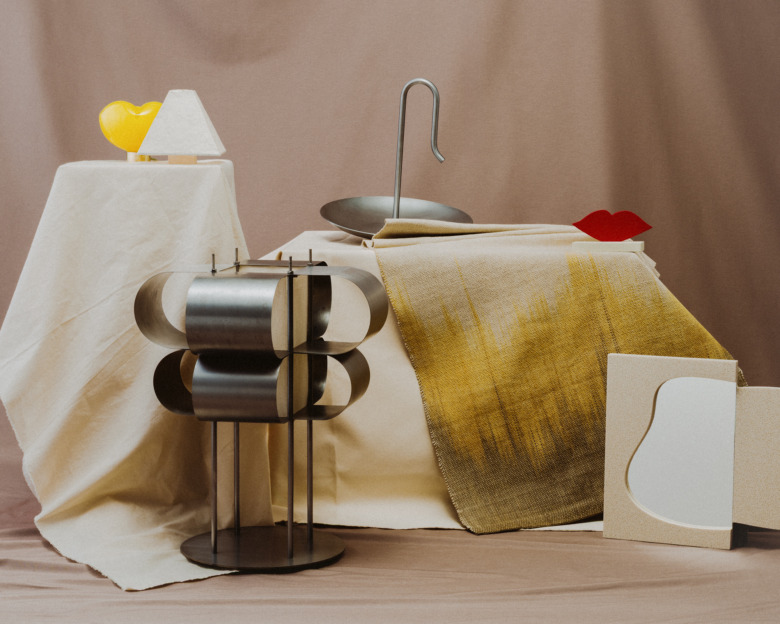
The Habitare Protos 2026 designers move boldly between categories. A functional object can double as a work of art, a lamp or mirror can resemble a sculpture, and an acoustic element can take the form of a painting. Collectively, they explore what an object can communicate through its material, form, and manufacturing process.
Habitare Protos curated by Imu Design
The exhibition is curated and produced by Saara Renvall and Elina Aalto. This year, the jury also included Habitare’s Creative Lead, Päivi Helander, alongside guest member Reeta Laine, a designer featured in the Habitare Talents exhibition in 2025.
“Lighting solutions, small furniture, and minor everyday objects dominate this year. An object no longer justifies its existence through function alone; instead, it serves as a sculpture, an ambience, or a statement. In textiles, an appreciation for craftsmanship is strongly apparent, while a raw, archaic quality continues to trend in materials. Innovations are pushing boundaries even further: the use of seaweed or traditional dyeing methods demonstrates that meaning is being sought right down to the raw material itself,” describes Elina Aalto.
Saara Renvall continues: “Collectible design reflects the times. As the path to industrial production becomes financially increasingly difficult, turning towards unique, one-off pieces is both a necessity and a choice. Finnish artisanry is growing stronger.”
The designers of the Habitare Protos 2026 group exhibition are:
Laura Grönlund, the collective of Viivi Hirvikangas, Olli Majalahti & Yudai Toyama, Netta Kandelin, Hanna Larissa Klie, Petra Lahti, Riikka Peltola, Julia Postrzech, the collective of Julia Postrzech & Emma Sjöholm, Olya Tsikhanchuk & Iiro Tujula (Studio Oi), and You-Chia Chen & Yi-Chiao Tien (Studio D-ja).
A SHEET OF MIRROR | Studio D-ja
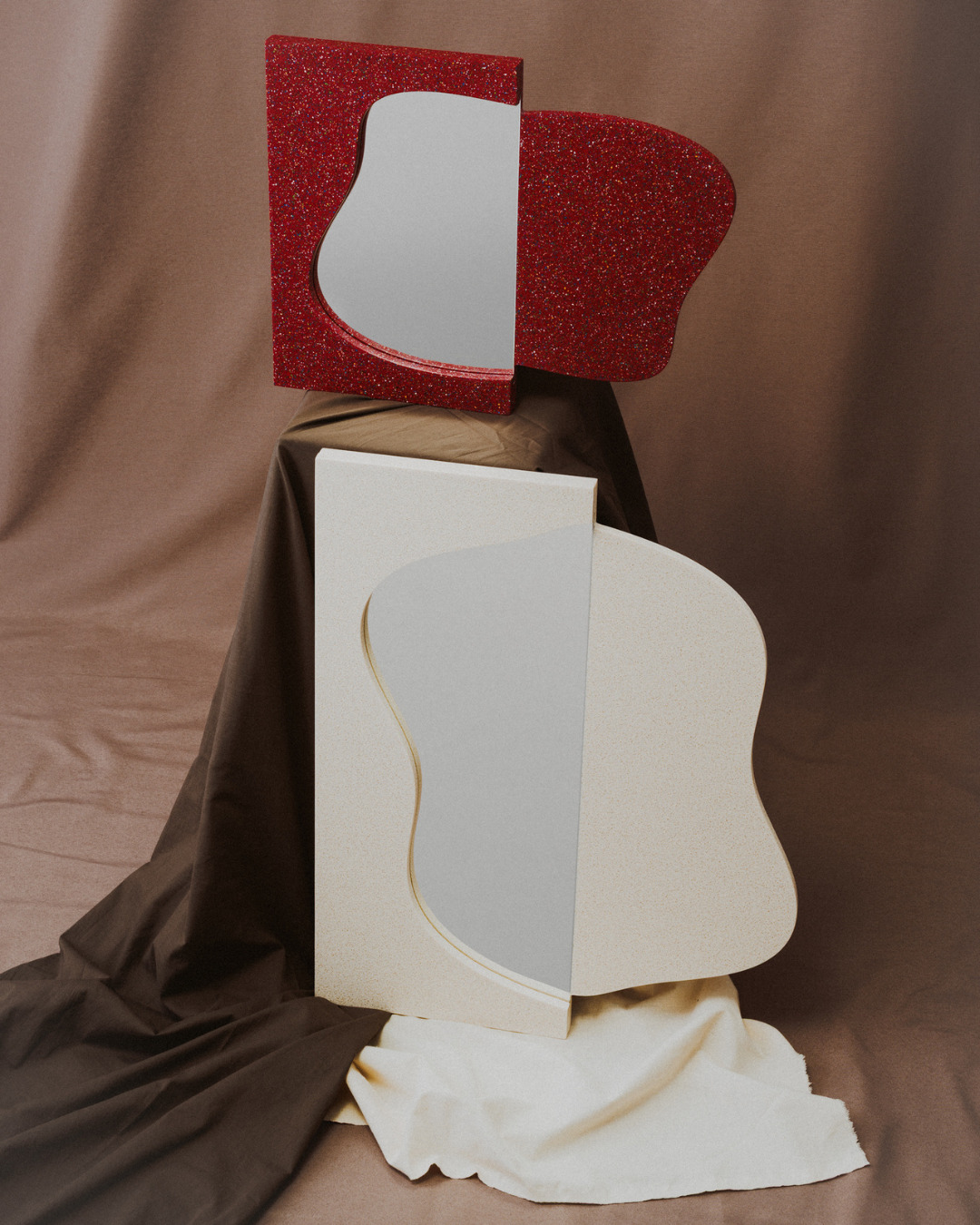
CNC-cut from a single sheet of recycled Durat composite, A Sheet of Mirror redefines the boundary between 2D material and 3D object. All components are nested within one continuous cutting outline. This constraint shapes the object’s distinctive geometry, where curves and openings emerge directly from the logic of the cut. This design minimises production waste and transport footprint while maximising visual impact through bold colour and minimal form.
Helsinki-based Studio D-ja was founded by interior architect Yi-Chiao Tien and textile designer You-Chia Chen. Their work moves fluidly across objects, textiles and spatial design, creating a dialogue between materiality and form. Each object is an invitation to pause, to touch, and to wonder.
KRUNA | Hanna Larissa Klie
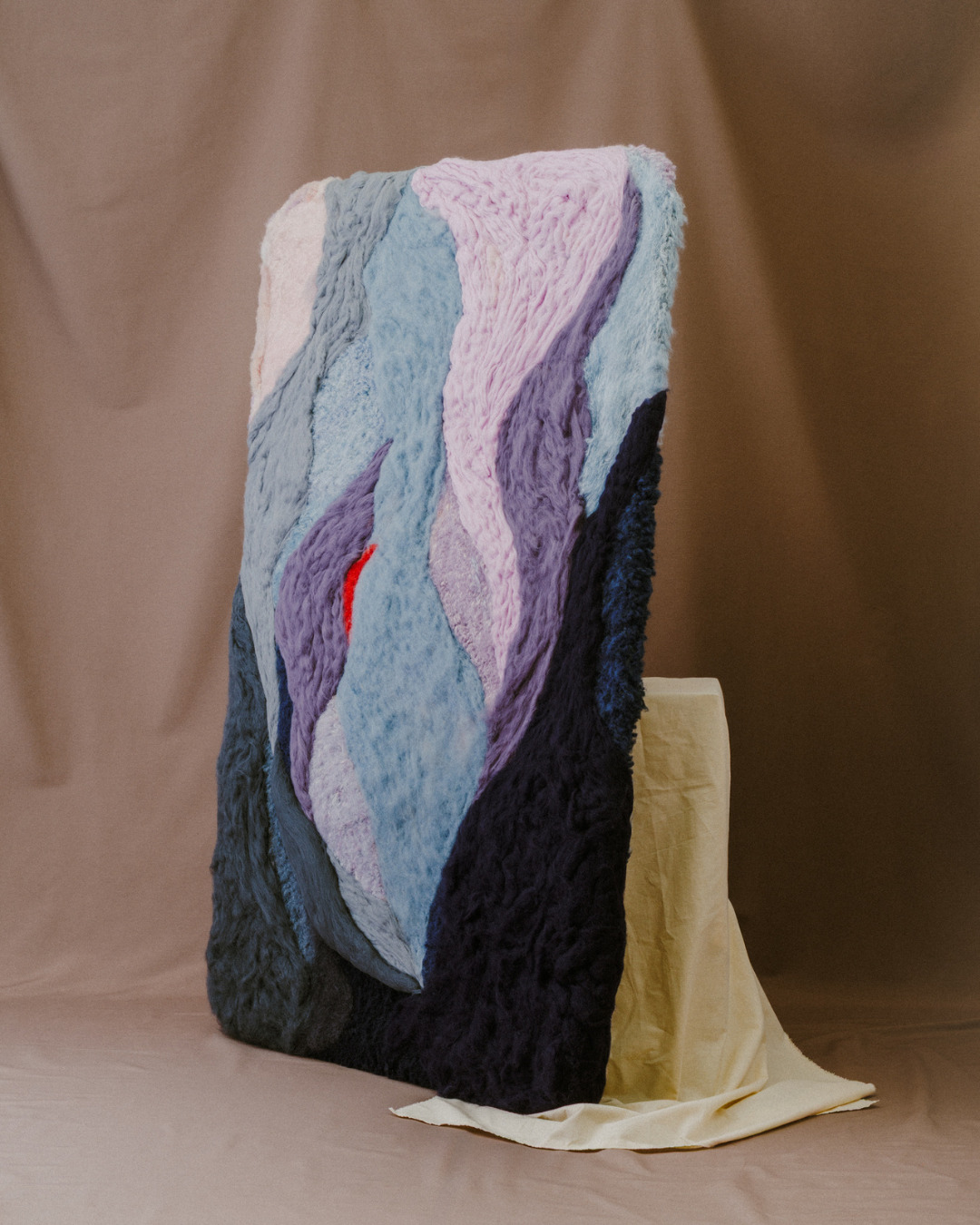
Inspired by the resonance of long sunsets and the pastel blue and pink hues of Kruununhaka in Helsinki, Kruna translates fleeting outdoor atmospheres into an interior textile piece. It functions both as wall art and as a soft, acoustic element, aiming to bring the softness of the outside world into the spaces where we spend most of our lives. Hand-tufted from 100% natural materials, the work renders the sky’s softness tangible, serving as a subtle reminder of our deep human need for nature, calm and connection.
Hanna Larissa Klie is an interior architect and designer whose work combines scientific research, intuition, and practicality to create pieces and spaces that go beyond pure function. Her practice is driven by a search for meaning. She aims to create objects that become meaningful to their users, encouraging long-term attachment, care, and preservation.
HÄIVE | Netta Kandelin
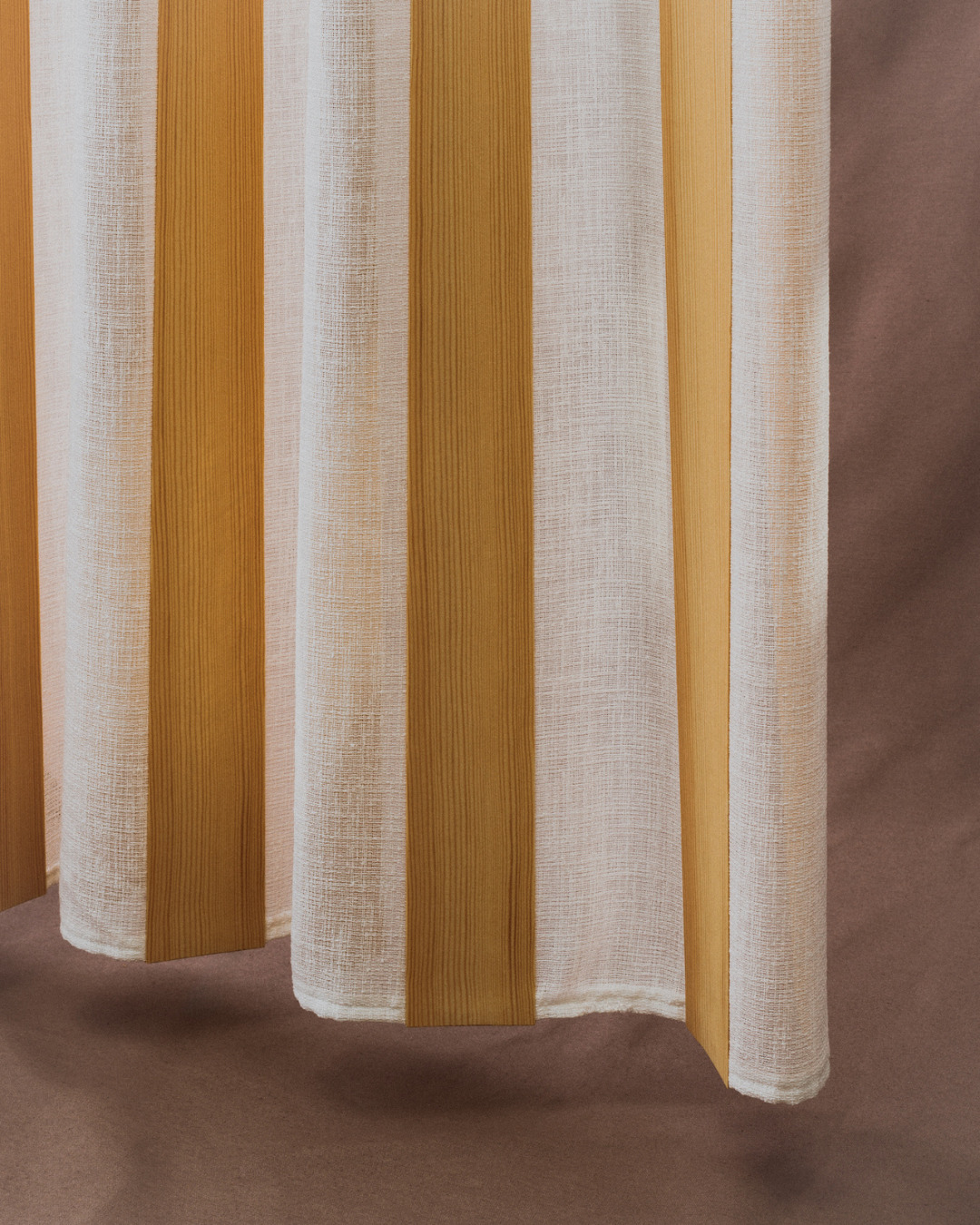
Häive exists at the intersection of material and product design, combining a wooden veneer surface with translucent textile. The properties of these two distinct materials create a dialogue between light and shadow, as well as openness and shelter, while their contrast brings both warmth and a structuring rhythm to the space. Häive adapts to different uses and dimensions, working both as a functional object and a spatial element.
Netta Kandelin is a designer working in interior architecture and furniture design, whose approach is material-driven and experimental. Her work is grounded in hands-on making and the exploration of materials and their potential, through which she develops functional and sustainable solutions. In Netta’s design, practicality, durability, and clarity of form come together in a carefully considered, user-centered end result where aesthetics and functionality are in balance.
nettakandelin.com | @nettakandelin
BARNACLE | Viivi Hirvikangas, Olli Majalahti & Yudai Toyama
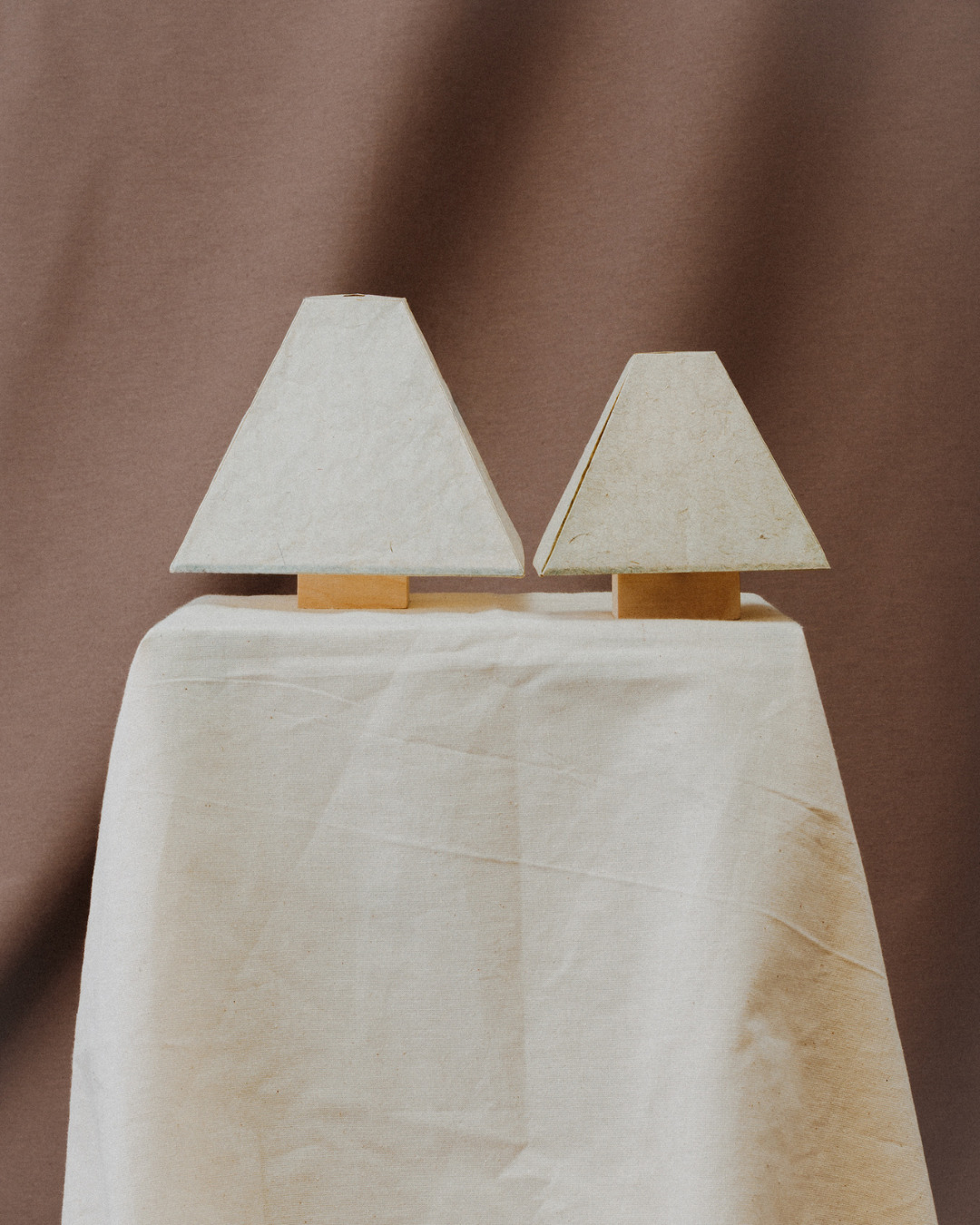
The Barnacle lamp is inspired by the calm waters of the Baltic Sea, while also drawing attention to and addressing the environmental effects that eutrophication has on the sea. The handcrafted paper is made from the Cladophora algae, commonly known in Finnish as Viherahdinparta, that grows excessively due to excess nutrients in the sea and smothers other marine life. By harvesting the algae, excess nutrients are removed from the sea, and the algae can be transformed into a functional and visually appealing material.
Olli, Viivi, and Yudai are Contemporary Design MA students from Aalto University. Material exploration is at the core of their practice, and through a hands-on approach, they explore future material possibilities. The trio has versatile interests in woodwork, ceramics, glass, textiles, and speculative design.
@sick__times | @majaolli | @yudaitoyamadesign
PAPILIO | Petra Lahti
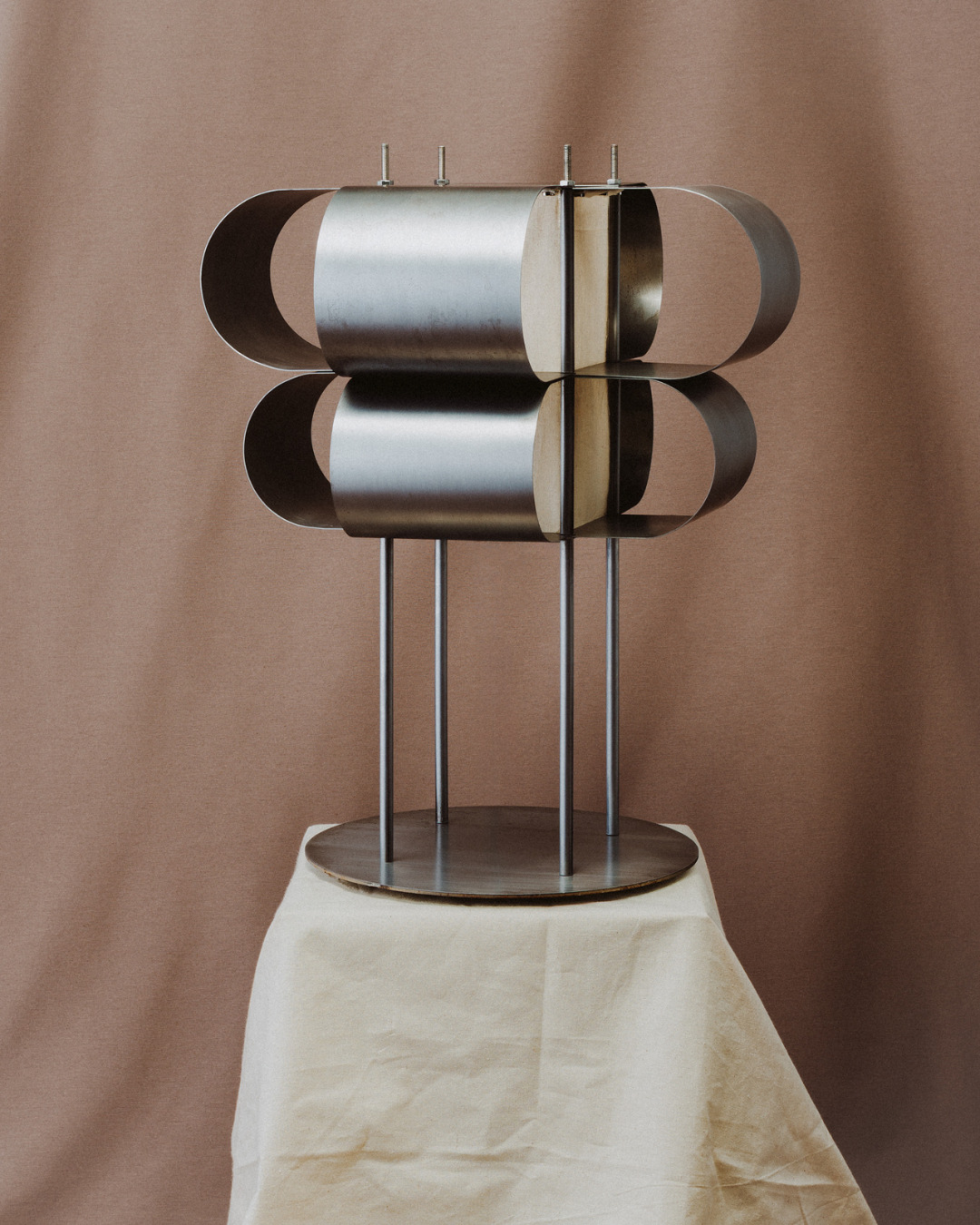
Papilio is a lamp that explores the relationship between light, materials, and modular structure. Central to the design was the pursuit of a refined, minimal construction and a natural dialogue between the materials. The lamp exists at the intersection of sculptural expression and functionality. The combination of metal and textile creates a contrast in which the textile forms a warm “core” within the metal structure. The aim was to create a lamp whose scale both requires and justifies the space around it.
Petra is an interior architect who approaches design intuitively and with sensitivity, through careful observation of the surrounding environment. She is interested in the relationship between people, furniture, and spaces, as well as the meaningfulness of environments as part of everyday life. Her thinking emphasizes a desire to understand what spaces truly offer people, not only how they look. Authenticity, honesty of materials, playfulness, and simplicity are characteristic of Petra’s work, where practicality and experiential qualities come together naturally.
A LITTLE SOMETHING SHELF | Studio Oi
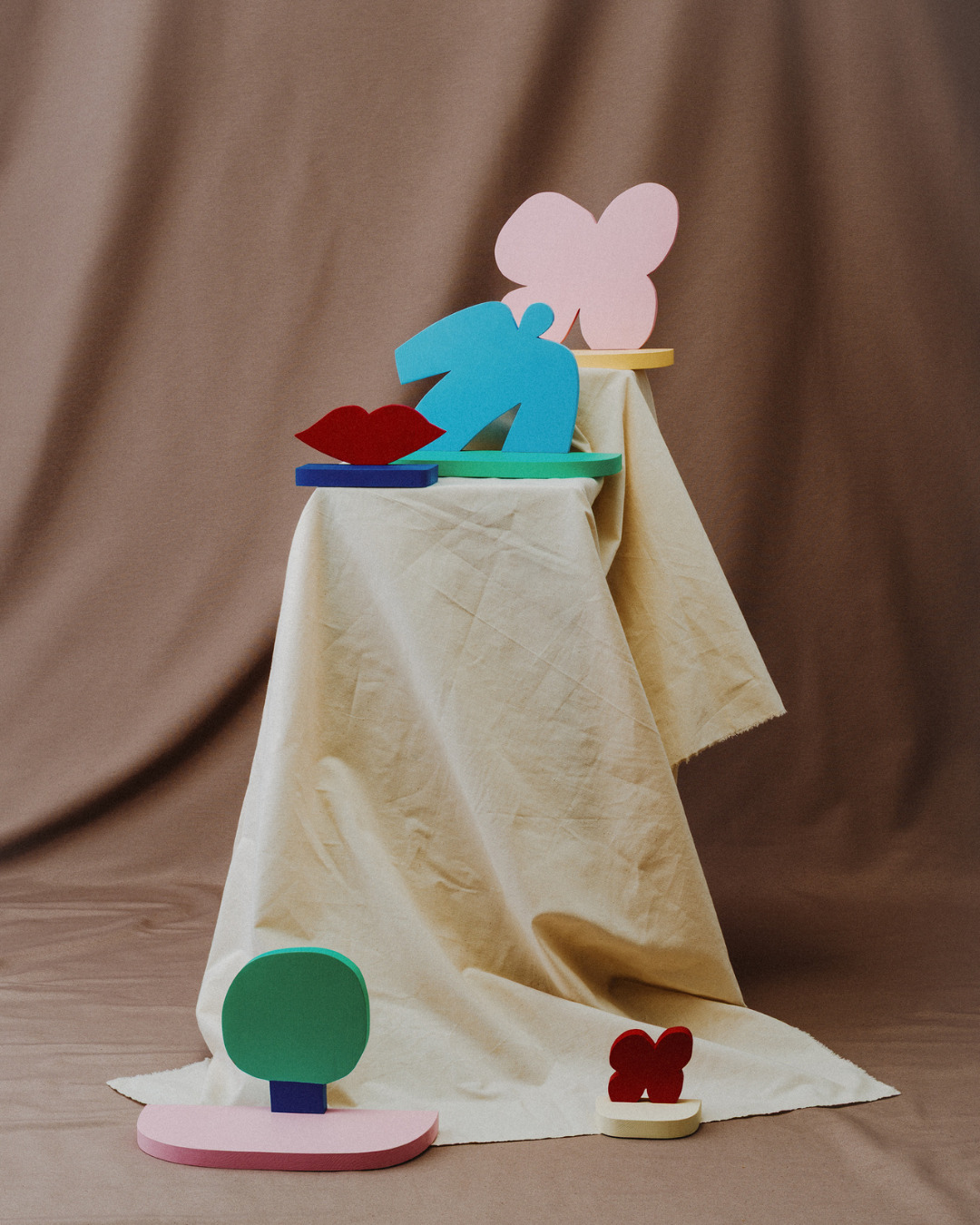
A Little Something Shelf is a small object with a big identity. It is a place for displaying important objects that carry value, memories, stories or emotional significance. It invites reflection on how we cherish what matters most, adding sentiment without clutter. Beautifully intentional, bold in color but simple in form, it is both an art object in itself and a design product.
Studio Oi is a collaboration between Olya Tsikhanchuk (born 1987 in Belarus), illustrator, artist, and graphic designer, and Iiro Tujula (born 1988 in Finland), art and shop class educator, photographer, and designer. As creative partners, they merge disciplines, experimenting across art, design, and craft to explore the potential of different knowledge areas. Their work blends minimalism with maximalism and whimsy with practicality, always emphasizing authenticity, curiosity, and joy.
HOME | Riikka Peltola
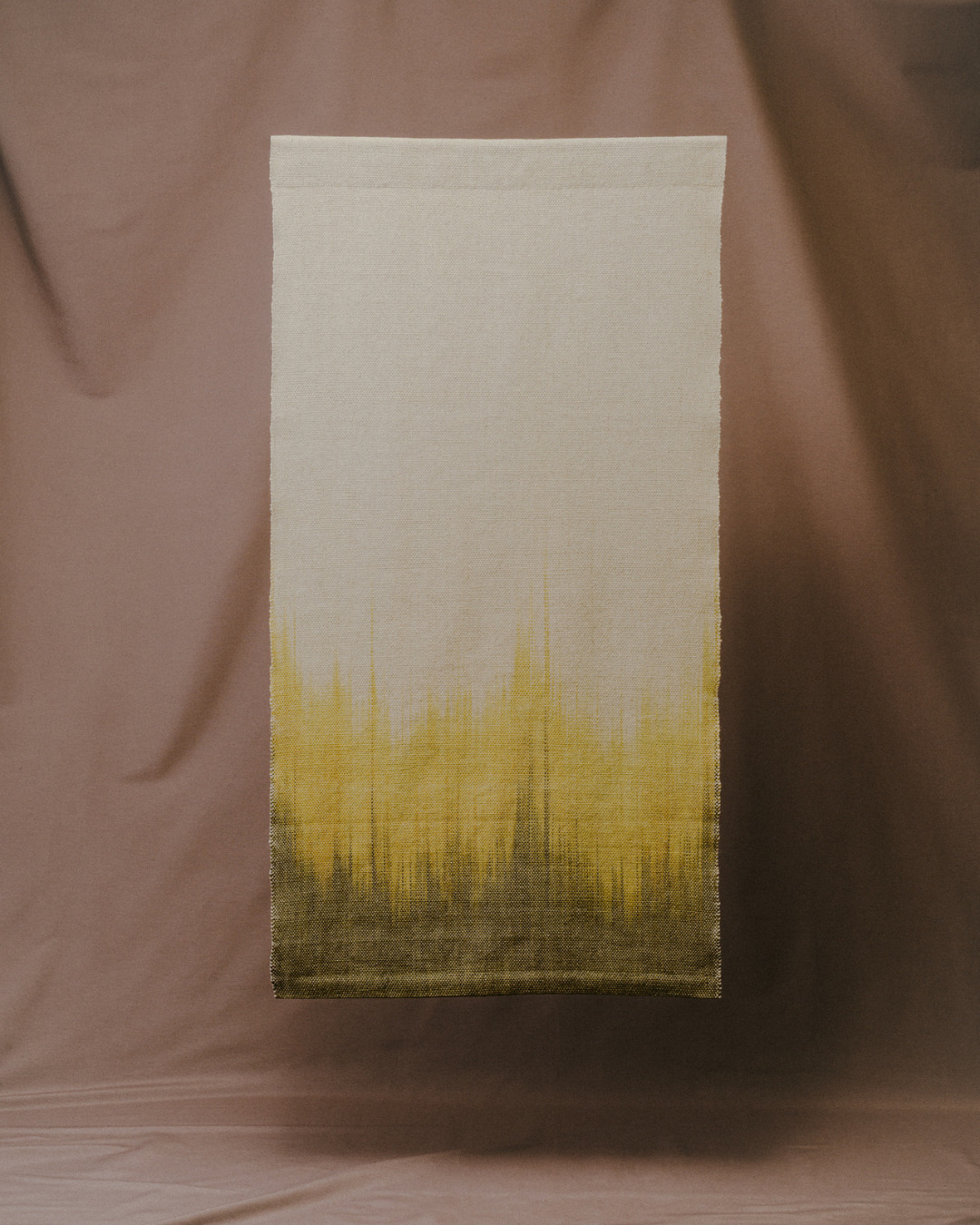
The HOME wall textile is an interpretation of the wall hangings traditionally used to insulate and decorate homes. Part of the cotton-linen warp was dyed before weaving using the skins of red and yellow onions. The work makes use of the strength of the fiber and the way it absorbs and carries color. The piece consists of handwoven panels that together form a soft domestic landscape.
Riikka Peltola is a fashion designer and textile artist graduated from Aalto University. Through her work, she seeks to understand the life hidden within materials as part of a mycelium-like ecology. Layers of time and memory are intertwined within the materials of her works. The ability to adapt and transform with changing conditions is reflected in the yarn made from fibers. Building emotional connections tied to materiality lies at the core of her practice. The fragility of materials is approached with tenderness and careful observation. Dreaming and interpreting the unseen through textile are essential parts of her creative process.
riikkapeltola.com | @riikkapelt
THIS LAMP HAS FEELINGS | Julia Postrzech
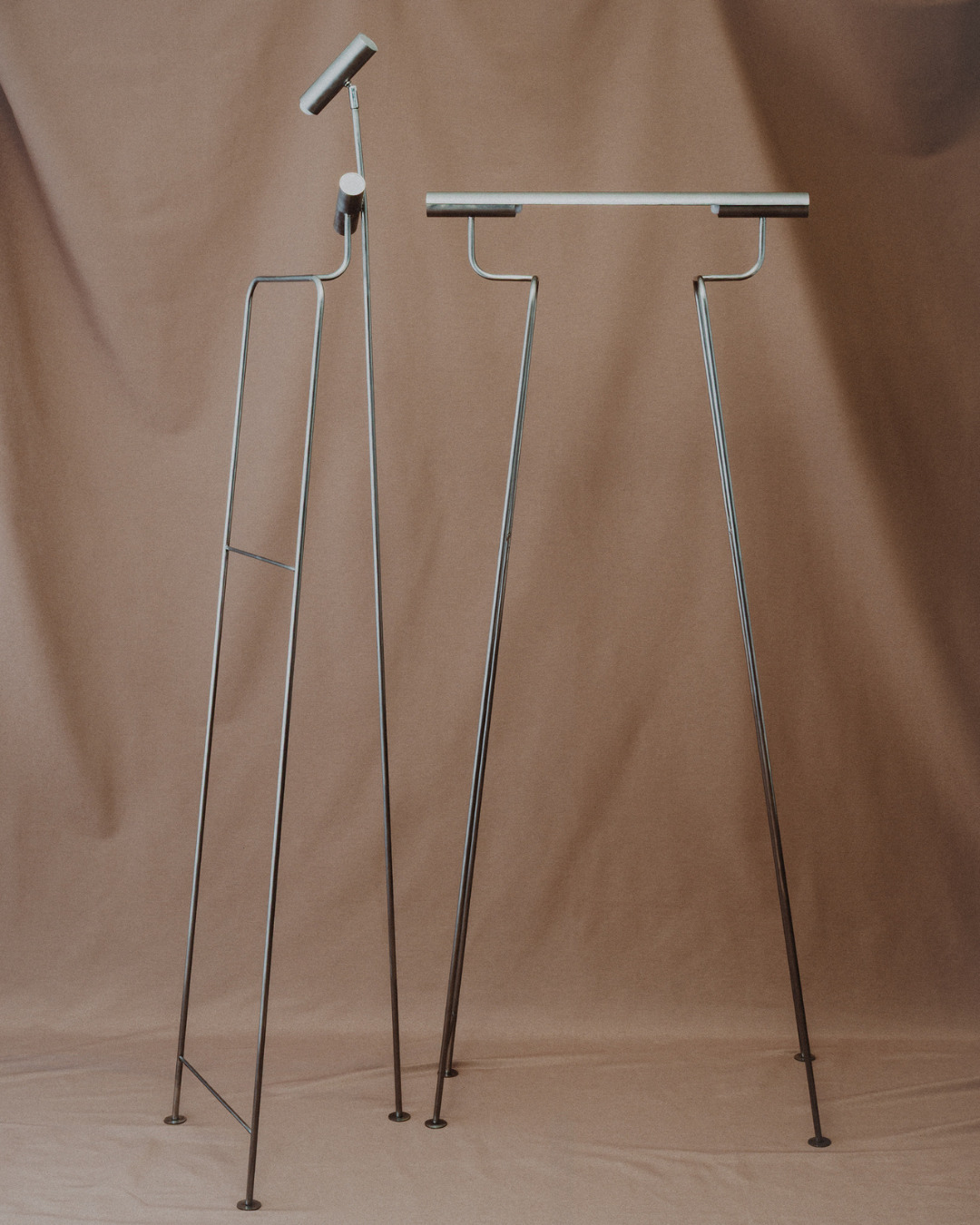
The lighting collection, with subtle references to the human body, makes use of our imagination and our innate tendency of attaching human likeness to an inanimate object. Each lamp represents a couple that is non-verbally communicating with one another. Through their specific body language they reveal a human emotion.
Julia is an interior architect and furniture designer. Her ideas begin with observations, discussions and materials she collects. Often curious about human psychology, behaviour and perceptions, she tries to translate these elements into physical objects and spaces. Her current designs take on investigative thinking and merge it into steel metals with simplified expressions.
juliapostrzech.com | @juliapostrzech
ULPU | Laura Grönlund
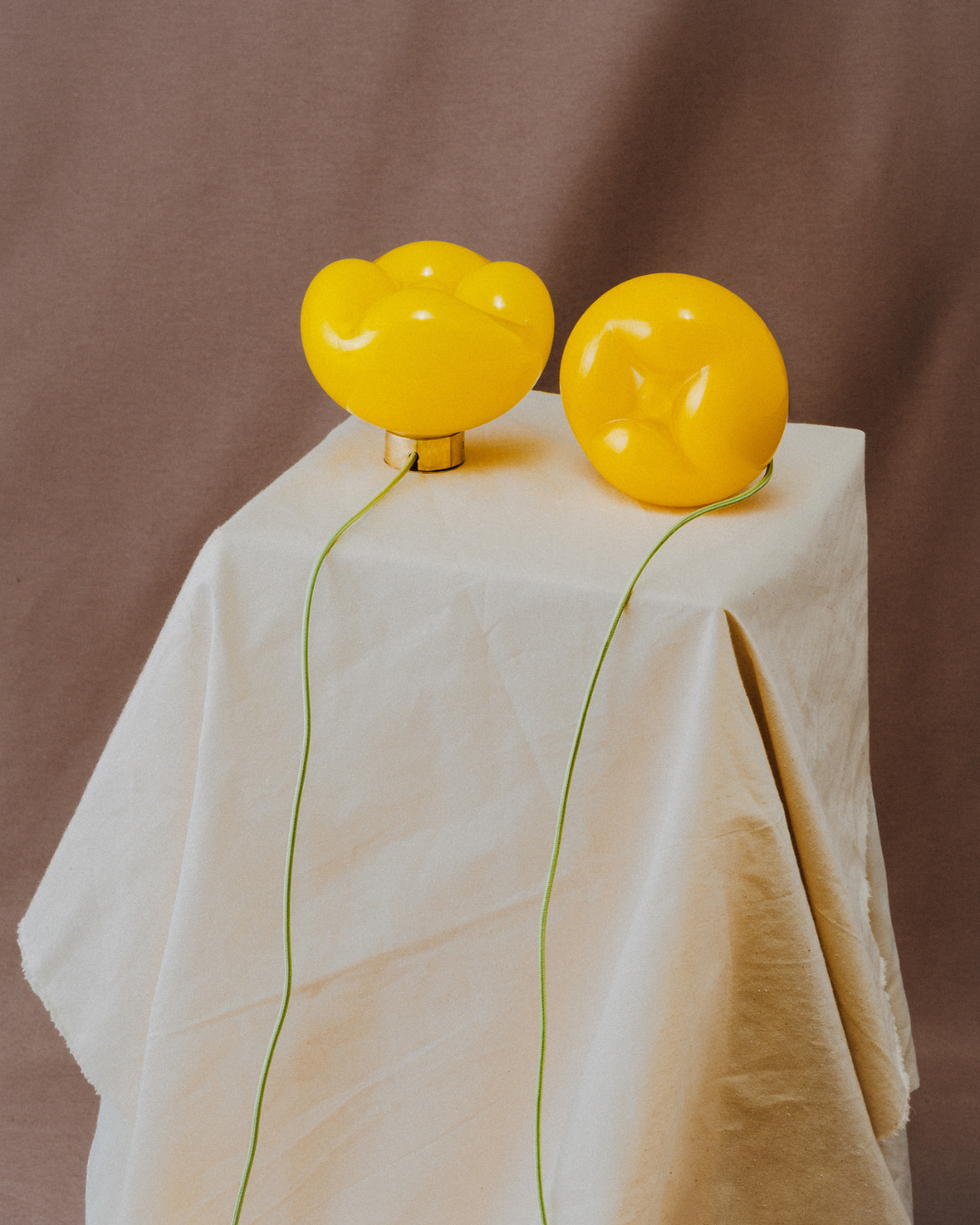
Ulpu is a wall lamp inspired by Finnish nature and glassmaking tradition. By combining glassblowing techniques with a soft and simplified form, the piece allows ornamentation to appear naturally through process and craftsmanship. Rather than a direct representation, the lamp evokes a fleeting memory of summer days and glittery waters.
Laura is a designer whose work is often guided by a sense of lightness and a joy in material-driven experimentation. For her, the act of creating is an essential way to process ideas and surroundings, with chance and unexpected discoveries being welcomed as part of the process. Often she draws inspiration from the emotions and memories that nature evokes.
PICK ME BOWL | Julia Postrzech & Emma Sjöholm
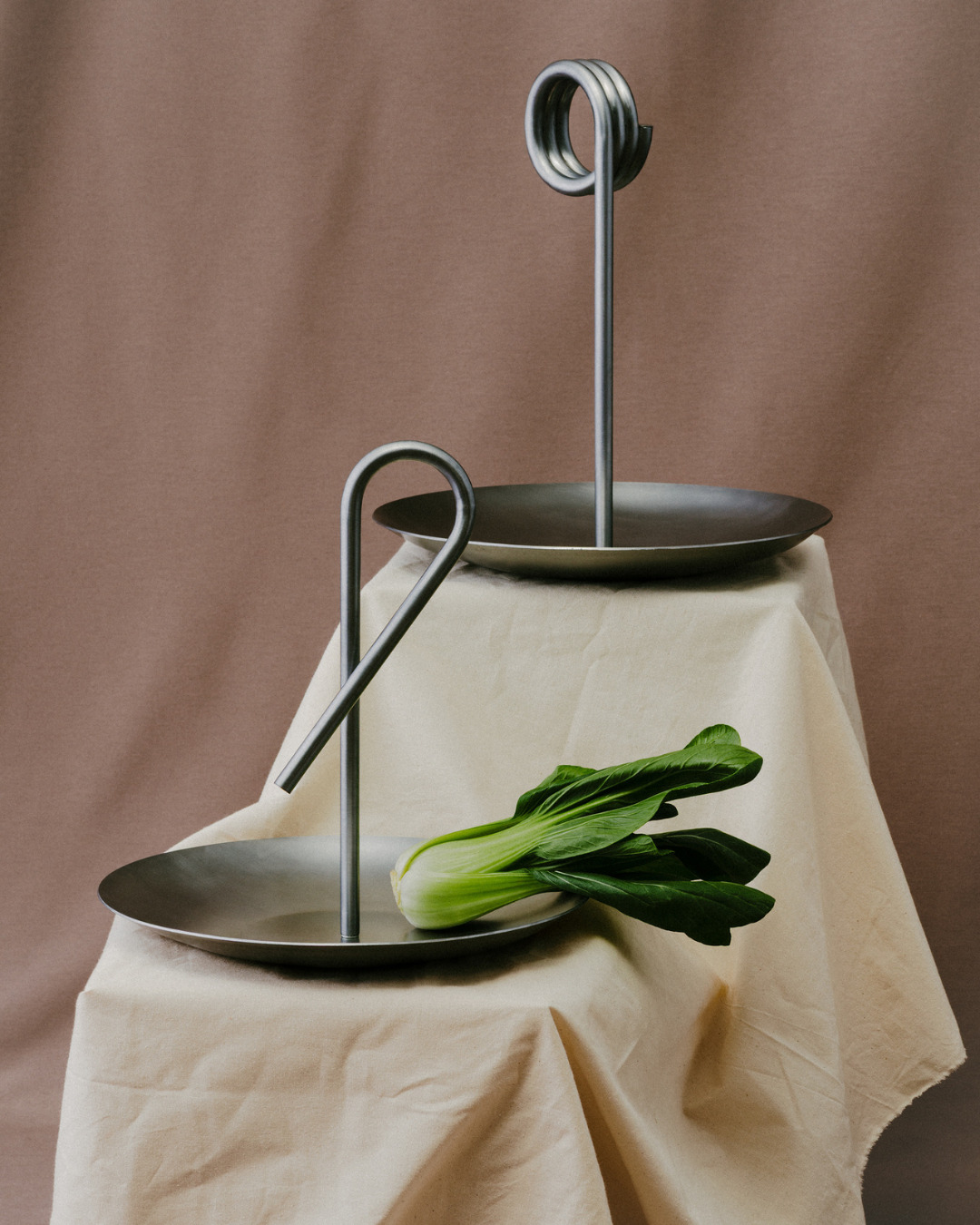
Pick Me Bowl plays with form and expression, taking on qualities of a plate, tray, and even a basket for picking fruit. The piece reimagines a traditional home accessory, the centre piece, as a multi-functional item that is suited for both outdoor and indoor settings. The small collection features three variations: the Loop, the Handle and the Hook.
Julia and Emma combine their efforts of using research within psychology, forms, and systems to twist familiar typologies into curious objects. Their work prioritises humanistic design which focuses on the experience and well-being shaped by objects. It is a perspective which interprets how we greet the object and how the object greets us.
juliapostrzech.com | @juliapostrzech | emmsio.com | @emmsio